Search This Blog

Monday, July 8, 2013

Barbet: Personality, Health, Grooming (French Water Dog)

The Barbet Dog is also referred to as French Water Dog, Barbette, griffon d’arret a poil laineux and French Gun Dog

About Barbet

Country of Origin, History of the breed
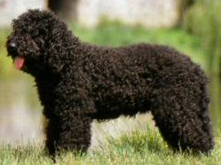
Though the real origin of the Barbet is lost in antiquity yet it has been opined that France had been the country of origin of the dog. The Barbet has been perceived as the original water dog of Europe. It had been known since the Middle Ages. Its progenitors date to the fourteenth century. Again this dog has been the ancestor of various modern breeds and types like the Poodle, the griffons, the Newfoundland and French sheepdog of Brie region.


Over the years Barbets had been employed for a variety of tasks. They had been used as a hunter’s assistant, as a shepherd dog for driving flocks and as a sailor’s companion helping out in securing lost items and lines at sea. The versatility of the breed and the multiple purposes to which they can be put has made the Barbets so very popular.

A General Description of the Breed

Barbets are medium sized and medium proportioned and have a characteristic thick, woolly coat covering their entire body. This coat is more curly than wavy. The coat provides efficient protection against damp and cold and forms a beard on the chin (‘barbe’ in French) that gives the dog its name- Barbet. The hairs on the head are especially long and cover up the eyes and the nose and form a mustache too (covering the bridge of the nose fully) alongside the beard. Their colors vary between black, chestnut, fawn, gray and white. However, it is uncommon to find mixed colors on the dog’s body. The dogs may or may not have any markings on their bodies.

Barbets have rounded and broad skulls and defined stops. They have square muzzles that are slightly shorter than the skulls. They have dark brown eyes and a black or brown nose. Their ears are long and broad and dropping. They have long tails whose ends form a slight hook.

Height

Male: 57 cm and 66 cm 
Female: 52 cm and 62 cm.

Weight: 17 kg and 28 kg.

Personality

Temperament of the Breed

The Barbets have a passion for water. Their love for swimming/engaging in playful activities in water does not die down even if it is cold. They are friendly and joyful creatures that serve as good and efficient companions. Barbets can be easily trained and they adapt themselves well to different situations. Hunters find them capable retrievers particularly of waterfowl while shepherds find them an effective aide in driving flocks. Again, sailors perceive them as a great help in fetching lost items and lines at sea.

Better suited to outdoor or indoor lifestyle?

Barbets adjust well to just any home environment and do not create problems with children and dogs or other pets of the household. They take well to apartment life provided their owners arrange for long walks for them and arrange for their occasional indulgence in swimming or other water sporting activities. It is important that the owners and members of their families devote time for caring for their pet Barbets as these dogs always crave for attention and companionship.

Barbets make perfect pets and can adjust well in a household environment. The company of children or other dogs or other pets does not create any problems for them.

How active is the breed?

Since by origin Barbets are working dogs and enjoy water and retrieving tasks they need to be given such works regularly. This will provide them the exercising that they need. It is a good idea to take Barbet pets on long walks on a daily basis. Since swimming is a passion for such dogs they ought to be provided with opportunities for swimming as well.

Grooming

Maintenance of the wooly coat characteristic of the Barbet requires lot of efforts. The wooly coat gets matted easily particularly if the dog goes into water. This should be brushed and detangled with a comb with lots of care. The twigs, mattes, leaves etc. that may get stuck to the coat while the dog pursues its daily activities through bushes etc. can thus be removed.

In order to facilitate the proper growth of the coat and get a tighter curl it is advised to completely shave a puppy when it is between 4 months and 6 months of age. Even later on periodic shaving of the coat helps it to become thick.


Health and Care

Barbets are not high-strung outdoors and have been known to be having fewer health problems. However, in some bloodlines hip dysplasia, cataracts and skin allergies have been observed. These need to be checked out in case of puppies that are being purchased to be kept as pets.

for more info's like Here

Tuesday, January 29, 2013

Dutch Shepherd


About Dutch Shepherd

Country of Origin, History of the breed

Dutch Shepherds and Belgian Shepherds share a common ancestry in the German Shepherds. However, unlike the Belgian Shepherd the Dutch Shepherd has not been able to attract a huge fan following. This breed had been developed in the Netherlands for use as a herding dog. Its ability to function as a herder and its quick reflexes had made the Dutch Shepherd popular. This had been utilized as an all-purpose farm guard, herder, cart-puller, guard, police and security dog.

The dog had evolved in early 1800s in the Southern parts of the Netherlands (the province of Belgium and neighboring Belgium, then part of Netherlands, in particular). Division by coat texture of dogs started with the beginning of dog shows some 100 years ago.


Description of the Breed

The dog’s body is muscular and symmetrical. It has a long muzzle and strong and rectangular teeth. The eyes of the dog are dark. They are also slightly slanting. The dog has relatively small ears. These remain stiffly erect.

The chest and belly are deep. They are not too drawn up. The feet of the dog are relatively small. They do not have dewclaws. The dog’s toes are well arched and its nails and pads are black. In between the toes protective hairs are present. The dog’s tail is slightly curved.

Coat

There are three varieties of Dutch Shepherd dogs- the longhaired, shorthaired and wirehaired varieties. While the longhaired dogs have long, straight, flat and harsh hair, the shorthaired ones have fine and dense hair. Again the wirehaired dogs have wiry hairs of medium length.

The coat color range of the three varieties, however, remains same for all- shades of brindle, including gray, silver, yellow, red or gold and blue. The shorthaired Dutch Shepherds are the most common followed by the wirehaired dogs. The longhaired Dutch Shepherds are very rare.

Height: The dogs have heights of 22-25 inches.

Weight: Weights of Dutch Shepherd dogs vary between 55 pounds and 67 pounds.


Personality

Temperament of the Dog

If performances at tasks like agility, catch, obedience competitions, guard work, herding, field trailing and companionship is the test then the Dutch Shepherds do stand as the most competent of all shepherd dogs. These dogs are very energetic and remain attached to their territories and work enthusiastically. They have been known to be obedient and loyal dogs- friendly, loving and playful with their owners and their family members. Again, they have also been known to be pretty cunning and smart- as and when the situation demands.

The Dutch Shepherds can be very friendly with children of the home provided the children do not disturb them when they are resting. They have been known to get along very well with other dogs of their breed, dogs of other breeds and other pet animals of the home.

The Holland Shepherd is a wonderful guard of the home. While it stops unwanted visitors in their tracks it greets family members and friends with warmth and enthusiasm.

It is easy to obedience train the dog and make them learn up new commands and skills. The shorthaired dogs are commonly utilized for defense or police dog trials. The dog can well withstand fatigue and bad weather. The all-weather coat that they have offers considerable protection even when temperatures fall down sharply.


Activity Level

Exercise requirement

Since Dutch Shepherds are working dogs they need to be kept exercised both physically and mentally at all times. A daily walk or jog is a must together with other ‘running’ exercises, which the dog does to its heart’s content.

Living Conditions

Dutch Shepherd dogs can be kept in apartments provided they are sufficiently exercised. They have an all-weather coat that ensures protection even during cold climates.


Grooming

The longhaired as well as the shorthaired Dutch Shepherd dogs need regular grooming. The dead and loose hairs are to be removed daily using a comb and brush. In case of the wirehaired dogs the coat ought to be plucked professionally twice a year.

The wirehaired dogs must never be brushed though they may be combed in moderation using a coarse comb. Excessive hair on the ears should also be removed. The all-weather coat of the dog need be bathed only when necessary as otherwise the natural oils in the skin might get removed.

 more about  Dog Grooming

Health Issues

Just like other working dog breeds the Dutch Shepherds too have few health problems. They are strong, fit and healthy and do not have any health problem specific to their breed.

Life Expectancy: About 12-14 years.


Thursday, May 31, 2012

Australian Cattle Dog

About Australian Cattle Dog


Country of Origin, History of the breed

The Australian Cattle Dog originated from Australia in the later part of the 19th century. The Australian Cattle Dog became popular owing to its high level of stamina and herding abilities. Their ability and inborn drive to control the movement of other animals, like a herd of cows, to pasture by leaping and nipping at their heels. They received their name as 'Heelers' owing to their habit of nipping at the heels of a cattle while herding.

Description of the Breed

A typical Herding Dog, the Australian Cattle Dog is a medium sized dog that is mainly used for herding cattle. The Australian Cattle Dog is a hard-muscled, sturdy and athletic dog without any trace of being frail or delicate. The Australian Cattle Dog is also well known for its agility.

Coat

As the name suggests, the coat of the Blue Heeler is blue in color with black, blue or tan markings. Although the puppies of a Australian Cattle Dog are born white in color, their coat color starts to change within 14 to 21 days.

A seasonal shedder, the Australian Cattle Dog is double-coated (to beat the weather) with the outer coat being plane and even. The Australian Cattle Dog has dark oval eyes and pointed ears widely set on a round broad head.

Height: 17 to 21 inches

Weight: 35 to 45 pounds

Personality

Temperament of the Dog

The Blue Heeler is a highly intelligent, energetic, independent, obedient, patient and agile dog. The Australian Cattle Dog is loyal, devoted, highly dependable, affectionate and protective by nature. They love to stay around humans and mix well with those children who were around them from their puppy stage.

Lack of activities and boredom can lead to major behavioral problems. They are aggressive towards strangers and don't usually get along well with other pets like cats or unknown dogs. Their courageous personality enables them to be perfect watchdogs apart from acting as herders or retrievers.

Basically, being herding dog by nature, they always have the instinct to herd anything that moves, be it adults, kids or cattle. Their high dominant self makes them aggressive a number of times. Many a times the Australian Cattle Dog has nipped at the heel of a child or an adult trying to herd them.

Training the Australian Cattle Dog is easy, however, their stubborn self may react aversely to harsh methods. Thus positive reinforcements are important to fully train the dog.

Activity Level

Exercise requirement

A herding dog by nature, the Australian Cattle Dog needs high amount of exercise that involves running, retrieving and playing. Lack of activities and boredom can lead to major behavioral problems like aggressiveness and destructiveness. They enjoy it immensely when their owners involve them in activities that will keep them physically and mentally busy.

Suitable for apartment living?

The Blue Heeler is most unsuitable for apartment or small space living. They are usually content living in huge farms (preferably in the country side or rural areas) with lots of free space to run and play around. A house having a big fenced yard suits them fine as well.


Grooming

A seasonal shedder, the Australian Cattle Dog needs regular brushing or combing with a firm brush to keep away ticks and mites. Eyes and ears should be cleaned regularly for hygiene purposes. Bathing should be done when only necessary.


Health Problems

The most common health issues noted by owners have been musculoskeletal (spondylosis, hip and elbow dysplasia, and arthritis) and reproductive (pyometra, infertility, and false pregnancy.
Related Posts Plugin for WordPress, Blogger...