Search This Blog

Showing posts with label Dog Breeds. Show all posts

Monday, July 15, 2013

Chinese Crested: Personality, Health, Grooming

Also known as: Chinese Edible Dog, Chinese Hairless Dog, Chinese Ship Dog, Chinese Royal Dog, Hairless Chinese Cresteds, Powderpuff Chinese Cresteds

About Chinese Crested

Country of Origin, History of the breed

The Chinese Crested originated in Africa. This breed of dog is said to have been originally bred from African hairless dogs. The Chinese Crested was used as currency throughout the world; they were traded by sailors and merchants who traveled internationally. The Chinese Crested was one of the favored breeds of dogs due to its small size and its ability to catch vermin aboard ships and in busy port cities throughout Africa, Asia, Central America, and South America.


A General Appearance of the Dog

The Chinese Crested has been bred into two types: the Hairless and the Powderpuff.

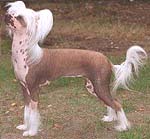
The Hairless is distinguished by its hair, which appears on its head, feet, and tail. The powderpuff is a rare form of the Chinese Crested breed.

The Powderpuff is distinguished by the hair that completely covers its body.

The Chinese Crested has a physically compact body which is heavyset; however, the Chinese Crested is sturdy and is well balanced. The Chinese Crested walks gracefully and is known to be a dedicated, playful companion. In addition, the Chinese Crested is known to coexist very well with other animals.

Coat

The Chinese Crested has been bred to display four colors: reddish brown, beige, black and tan, and solid black.

The Chinese Crested may display a reddish brown coat that also has black tones at the chin and whiskers. The beige coat is a mix of reddish brown and black, with a black mask and whiskers. The black and tan coat will display black and reddish brown colors that are seen above the eyes, under the chin, and on the legs. The black coat is a solid colour throughout the dog’s body, with a natural “frosting” on the muzzle of the mature Chinese Crested.

The hairless Chinese Crested displays long, soft tufts of hair that are only seen on the feet, head, and tail. The powderpuff Chinese Crested displays an outer coat with long, straight hair; the powderpuff also has an undercoat that is smooth, fine, and soft.

Height: 9 to 13 inches.

Weight

The average weight of the Chinese Crested is from 5 to 10 pounds; the weight of this breed should not exceed 12 pounds.


Personality

The Chinese Crested has a personality that is affectionate, alert, calm, entertaining, and intelligent. In addition, the Chinese Crested can be playful and will become excited at the prospect of eating a meal or having a between-meal treat. The Chinese Crested can be an astute watchdog, and it displays a non-aggressive attitude toward strangers.

Temperament of the Dog

This breed is suitable for families as it is not aggressive toward young children, adults, or animals. The Chinese Crested is a “home bound” dog, and it does not exist well in a kennel. This is a breed that co-exists very well in a family environment and may experience separation anxiety when removed from familiar people or surroundings.

The Chinese Crested requires constant companionship and will become anxious, noisy, or destructive if left alone for more than a few hours. This breed will not do well in a home with people who are frequently absent. The Chinese Crested requires consistent contact with people, sights, and sounds. If the Chinese Crested is denied companionship, it can become resistant and stubborn.

Better suited to an indoor or outdoor lifestyle?

The Chinese Crested is best suited to a home or apartment with constant occupancy and attention. This breed does not enjoy the outdoors.

Are they suited to homes with kids?

This breed enjoys older children. The Chinese Crested is suspicious of small children due to the possibility of unintentional mistreatment. Small children might step on a puppy or accidentally injure it. Also, small children who are loud and move quickly may make the Chinese Crested puppy experience stress that results in shyness or defensive biting.

Training

The Chinese Crested is a breed that is known for its high intelligence. This breed has the tendency to climb or dig when it feels too confined. As a result, the owner of a Chinese Crested may need to install fencing that extends two or three feet into the ground.

Activity Level

This breed is highly active; however, it only requires moderate exercise. The Chinese Crested responds well to regularly scheduled, brief walks outside the home.

Grooming

The Chinese Crested tends to be odorless, but the powderpuff breed requires weekly grooming.

The hairless Chinese Crested requires a regular skin massage, washing, and moisturizing. The skin of the Chinese Crested may burn when it is exposed to prolonged sunlight.

Health and Care


Any toy breed can be fragile and the Chinese Crested is not an exception. Care must be taken to prevent accidental death from sitting or stepping on the dog. In addition, puppies might jump from an owner’s arms or fall to the ground from furniture and be seriously injured or even killed.

Cautions about Breeding the Dog

The Chinese Crested might be born with knee problems, missing teeth, and missing claws.

Litter Size: 2 to 4 pups.

Life Span: 10 and 14 years.

for more info click here

Tuesday, July 9, 2013

Havanese: Breed Personality, Fitness & Care

Group: AKC Toy; KCGB Toy
AKC Ranking: 38
Also Known As: Bichon Havanais, Havana Silk Dog, Spanish Silk Poodle, “Circus Dog”


Appearance of the Dog

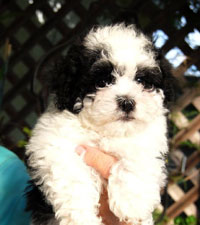
The Havanese breed is a deceptively light and frivolous looking dog that is assuredly sound of mind and agile in movement. Its long, fluffy coat gives no indication of the “trooper” in this tried and true companion.

The breed is longer in leg than its cousin the Bichon and less dense in coat.

The Havanese’s expression is soft and intelligent, mischievous rather than cute. The eyes are dark brown, large, almond-shaped, and set rather widely apart. Ears are of medium length with long hair and hang down.

The Havanese has a long tail that is covered with long silky hair. The profuse coat varies from wavy to curly. The Havanese is a double-coated breed with soft hair, both on outer and undercoat. Adult coat reaches 6 to 8 inches, and has a pearly sheen.

Coat Color

The Havanese comes in an array of colors that include black, silver, cream, champagne, tan, blue, chocolate, fawn, gold and white.

All colors are acceptable, singly or in any combination and may be brindled, with the exception of white. No preference is given to one color over another. The skin may be freckled or parti-colored.

Coat Type

The Havenese coat is unique and reflects centuries of living in the tropics. It consists of a double coat that may reach 6-8” in length and is remarkably soft and light in texture. While it appears dense, the coat is actually a profusion of raw silk-like floss that has an insulating, protective quality against the harsh tropical sun. The coat of the Havanese should never be rough or wooly. Their coat may be straight, wavy or even curly, but usually is a result of a mix of one or more textures.

Height
Males: 9-10 inches
Females: 8-9 inches

Weight
Males: 9-11 lbs.
Females: 7-10 lbs.

Personality
Temperament of the Dog

Havanese are very sociable and happy dogs who are easy to obedience train. This makes then good, portable traveling companions as they are quite adaptable. Long absences from family are not tolerated by the Havanese breed so should be considered when choosing one as a pet.

They do best in pairs or at least with other another canine in the family. Havanese get along well with other family pets.

This clever little acrobat was known as the “circus dog “for many years because of its ability to quickly learn and execute tricks.

Anxious to please, Havanese is a lively, loving breed that adores children and adults alike. Havanese are natural companion dogs: gentle and responsive, with a high degree of intelligence.

Because of their good nature they will not make much of a protective watchdog, but will alert you to strangers. Barking is one of their fondest pastimes so they should be taught early to quit barking on command so that their barking does not become a nuisance.

This curious dog loves to sit up high on a chair to observe what is going on. It is very sensitive to the tone of your voice. Harsh words will only upset the dog and will achieve very little.

Better suited to an indoor or outdoor lifestyle?

Great for apartment living, Havanese will usually find indoor play plenty of exercise and when finished locate a seat by a window to observe the outside.

Since they are so social, a walk on lead with opportunity to meet others will never be dismissed.

The Havanese is a breed meant to live in your home, and never outside or in a kennel.

Are they suited to homes with kids?

Families with children were made for the Havanese. Their extreme need for companionship and closeness are in complete harmony with children’s play and cuddle time.


Grooming

The look of the Havanese is natural and unkempt; however this is not achieved by neglect.

The soft, double coat of the Havanese will require frequent care and should be considered when choosing this breed. Daily brushing of the coat is necessary if it is to be kept long. While brushing always look for any small mats forming. A trip outdoors for a morning duty in wet grass can be just the situation for mats to start.

Many pet owners opt to have their Havanese professionally groomed 3-4 times a year and kept in a short, easily maintained cut.

Nails should be clipped regularly and eyes should be kept free from hair. The feet also may need to be trimmed neatly.

This breed is great for those with allergies and does not shed. Some divisions of the breed are said to be hypo-allergenic but check with your breeder to see which one is best suited to your needs.


Health and Care

Genetic Problems

The Havanese is a very healthy long-lived breed however; some are prone to cataracts, luxating patellas, poodle eye and dry skin.

With proper breeding by a reputable breeder, you should eliminate or reduce any of these inherent problems.

Breeding the Dog and any Cautions

Havanese have no serious issues concerning breeding but only your breeder should be consulted when choosing a proper mate for your pet.

Litter Size: Average litter 4 puppies
Life Span: 14-15 years.

for more info's click here

Monday, July 8, 2013

Barbet: Personality, Health, Grooming (French Water Dog)

The Barbet Dog is also referred to as French Water Dog, Barbette, griffon d’arret a poil laineux and French Gun Dog

About Barbet

Country of Origin, History of the breed

Though the real origin of the Barbet is lost in antiquity yet it has been opined that France had been the country of origin of the dog. The Barbet has been perceived as the original water dog of Europe. It had been known since the Middle Ages. Its progenitors date to the fourteenth century. Again this dog has been the ancestor of various modern breeds and types like the Poodle, the griffons, the Newfoundland and French sheepdog of Brie region.


Over the years Barbets had been employed for a variety of tasks. They had been used as a hunter’s assistant, as a shepherd dog for driving flocks and as a sailor’s companion helping out in securing lost items and lines at sea. The versatility of the breed and the multiple purposes to which they can be put has made the Barbets so very popular.

A General Description of the Breed

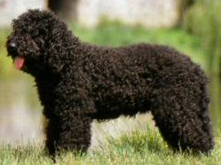
Barbets are medium sized and medium proportioned and have a characteristic thick, woolly coat covering their entire body. This coat is more curly than wavy. The coat provides efficient protection against damp and cold and forms a beard on the chin (‘barbe’ in French) that gives the dog its name- Barbet. The hairs on the head are especially long and cover up the eyes and the nose and form a mustache too (covering the bridge of the nose fully) alongside the beard. Their colors vary between black, chestnut, fawn, gray and white. However, it is uncommon to find mixed colors on the dog’s body. The dogs may or may not have any markings on their bodies.

Barbets have rounded and broad skulls and defined stops. They have square muzzles that are slightly shorter than the skulls. They have dark brown eyes and a black or brown nose. Their ears are long and broad and dropping. They have long tails whose ends form a slight hook.

Height

Male: 57 cm and 66 cm 
Female: 52 cm and 62 cm.

Weight: 17 kg and 28 kg.

Personality

Temperament of the Breed

The Barbets have a passion for water. Their love for swimming/engaging in playful activities in water does not die down even if it is cold. They are friendly and joyful creatures that serve as good and efficient companions. Barbets can be easily trained and they adapt themselves well to different situations. Hunters find them capable retrievers particularly of waterfowl while shepherds find them an effective aide in driving flocks. Again, sailors perceive them as a great help in fetching lost items and lines at sea.

Better suited to outdoor or indoor lifestyle?

Barbets adjust well to just any home environment and do not create problems with children and dogs or other pets of the household. They take well to apartment life provided their owners arrange for long walks for them and arrange for their occasional indulgence in swimming or other water sporting activities. It is important that the owners and members of their families devote time for caring for their pet Barbets as these dogs always crave for attention and companionship.

Barbets make perfect pets and can adjust well in a household environment. The company of children or other dogs or other pets does not create any problems for them.

How active is the breed?

Since by origin Barbets are working dogs and enjoy water and retrieving tasks they need to be given such works regularly. This will provide them the exercising that they need. It is a good idea to take Barbet pets on long walks on a daily basis. Since swimming is a passion for such dogs they ought to be provided with opportunities for swimming as well.

Grooming

Maintenance of the wooly coat characteristic of the Barbet requires lot of efforts. The wooly coat gets matted easily particularly if the dog goes into water. This should be brushed and detangled with a comb with lots of care. The twigs, mattes, leaves etc. that may get stuck to the coat while the dog pursues its daily activities through bushes etc. can thus be removed.

In order to facilitate the proper growth of the coat and get a tighter curl it is advised to completely shave a puppy when it is between 4 months and 6 months of age. Even later on periodic shaving of the coat helps it to become thick.


Health and Care

Barbets are not high-strung outdoors and have been known to be having fewer health problems. However, in some bloodlines hip dysplasia, cataracts and skin allergies have been observed. These need to be checked out in case of puppies that are being purchased to be kept as pets.

for more info's like Here
Related Posts Plugin for WordPress, Blogger...